Route-to-requirement analysis
Electric tricycle for sanitation workers by operating duty
Collection duty determines the body, payload, battery, brakes, tires and charging plan that belong in the RFQ. The service translates working conditions into comparable supplier questions without claiming that one generic model fits every route.
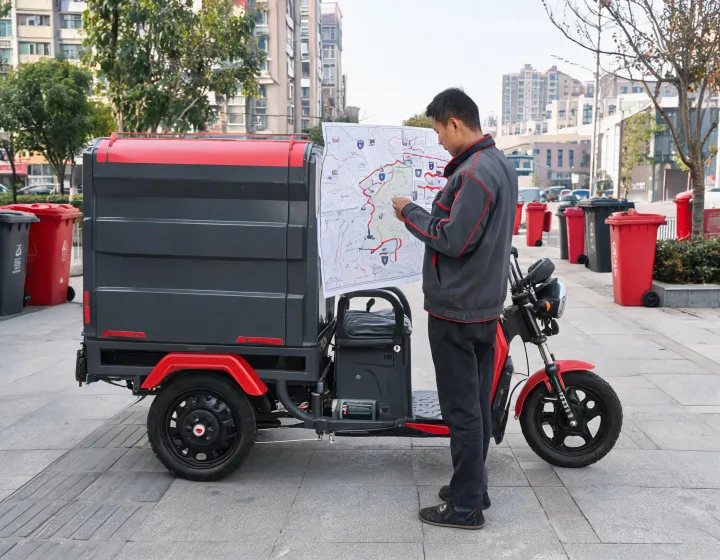
Match configuration questions to the sanitation task
Pedestrian zones and compact routes
Narrow access, frequent stops and interaction with workers or pedestrians make width, turning circle, low-speed control, braking and visibility central procurement fields.
Municipal waste collection cycles
Bin handling, wet material, repeated loading and wash-down change the cargo body, corrosion protection, drainage, payload distribution and cleaning requirements.
Large campuses and industrial facilities
Longer routes, grades and multi-shift use put more emphasis on usable battery energy, duty-cycle range, charger compatibility, thermal limits and service access.
Application decisions that change the quotation
| Decision | Comparison basis | Evidence request |
|---|---|---|
| Cargo body | Same waste stream, internal volume, material, loading and unloading method | Body drawing, material schedule and operating instructions |
| Payload | Completed vehicle with body, battery, operator and accessories included | Curb-weight and rated-payload basis for quoted build |
| Battery and range | Usable kWh under stated load, route, speed and ambient conditions | Battery data and test method rather than headline range alone |
| Delivered scope | One quantity, destination, Incoterm, packing and document list | Itemized quotation with exclusions and validity |
Vehicle price is not landed procurement cost. Keep inspection, inland transport, freight, duty and destination services on separate lines.
Evidence for the exact sanitation configuration
Application notes are buyer inputs. Supplier documents must identify the offered body, battery, motor and model-year configuration.
Can brochure payload be accepted?
Only after its mass assumptions match the completed unit. Request curb weight, body mass, battery, operator assumption and rated payload for the quotation.
Does a range number define shift coverage?
No. Route grade, payload, speed, stops, temperature and auxiliary loads can change energy use. Compare figures only when their test bases are visible.
Who confirms destination acceptance?
The supplier supplies exact-model evidence, while qualified destination-side parties review import, registration, safety and environmental applicability. CleanRoute Tri Supply does not certify vehicles.
Turn the sanitation route into a supplier-ready brief
Share waste stream, route, body, payload, battery, charging, quantity, destination, delivery window and document requirements.
Share Vehicle Requirements